
Food-for-Thought for the Sheep of God to Ruminate on (Luke 4:4)

Comment

Food-for-Thought for the Sheep of God to Ruminate on (Luke 4:4)

By Joseph Ostrander

As the volunteer moderator for the church’s blog, I thought it would be a good idea to let you, the reader, get to know how I process Sunday’s service in a way that translates into something encouraging, and provoking, or food-for-thought for this new blog forum.  This is how I experienced Sunday’s corporate gathering:

First: I was the recipient of two amazing words of encouragement that I will need to ruminate on as the Spirit illuminates/expands their implications; 1) I am a pillar to/in the church that meets together as Coastlands Vineyard Church; and 2) I am soon to be in the spotlight—off the bench so-to-speak.  Any further insight from the saints reading this will always be appreciated.

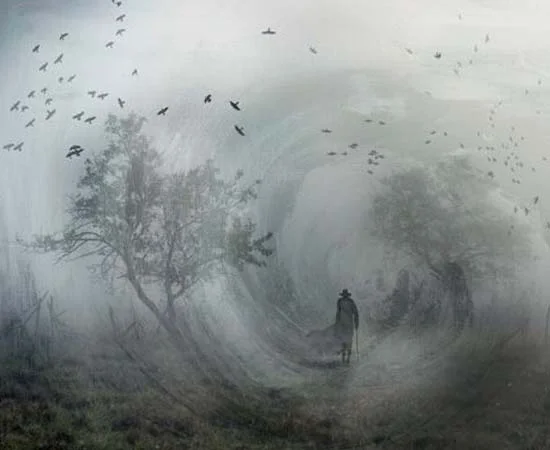
Next: during the music/praise/worship portion of the service, Rachel shared a song that had this phrase or context—God’s love is like a hurricane.  Say what?  I must confess, there are few contemporary Christian worship songs that I find myself singing along with.  And this song was definitely not one of them.  However, the concept of God’s love like a hurricane did resonate with me personally.  During the extremely intense fallout from my divorce and resulting nervous breakdown, I felt God did ‘envelop’ me in a whirlwind—a whirlwind that was both a powerful storm—and a refuge.  The whirlwind vacuumed up all the loose clutter of my flimsy faith (down to the foundation), and it also ‘lifted’ off (painfully) some of the stubborn scabs (or residue) that were covering up the guilt and shame of my sin management efforts.  You see, I had been scratching at the persistent elements of my psyche that I felt were my personal and spiritual disfigurements; my low self-esteem, my lack of confidence, my personality flaws, and my seemingly lack of obvious skills/talents.  God’s whirlwind forced the scabs off those sore spots on my soul and He’s been dealing with them in a greater way these past 6 years than in the first 55-years of my existence.  As I looked in my bible’s concordance, I found these scriptures that I could now better appreciate: Nahum 1:3b, “His way is in the whirlwind and the storm…” and also verse 7, “The Lord is good, a refuge in times of trouble.  He cares for those who trust in him…”

The idea of God’s love being like a hurricane was confirmed when Chris mentioned how there is the element of ferocity to God’s love.  God’s ferocious anger is kindled against all the sin, woundedness, brokenness, shame and guilt that would keep us bound up, insulated and blinded to His love and mercy…

Scott’s word FREEDOM resonated with this awesome consideration: “It is for freedom that Christ has set us free. Stand firm, then, and do not let yourselves be burdened again by a yoke of slavery.” ~Galatians 5:11

And: “So if the Son sets you free, you will be free indeed.” ~John 8:36

Finally, some additional observations to ruminate on: Chris’ opening prayer included the petition for God to ‘unburden’ us.  It is something that seems to be impossible when the weight of real worries and concerns will not let us rest.  I am reminded of Jesus’ words recorded for us at the end of the 11th chapter of Matthew’s gospel.  Let’s revisit them, shall we?  “Come to me, all you who are weary and burdened, and I will give you rest.  Take my yoke upon you and learn from me, for I am gentle and humble in heart, and you will find rest for your souls.  For my yoke is easy and my burden is light.”

Notice this: Jesus does not require us to first take off our current burdens.  To do so would be intellectually dishonest (denial), and something that we cannot do ourselves.  He does offer this curious option though: take upon ourselves another burden, His yoke.  Place His yoke upon our already burdened shoulders and learn from Him (or delight ourselves in Him).  He is humble, gentle, and very patient.  His yoke is easy!  His burden is light!  I always considered this lightness to be more illumination than heft or weightiness.  That’s my perspective anyway. 

Think about it…

Amen.

Comment

Food-for-Thought for the Sheep of God to Ruminate on (Luke 4:4)

Comment

Food-for-Thought for the Sheep of God to Ruminate on (Luke 4:4)

By Joseph Ostrander

Greetings to the chosen saints living out their faith in community also known as Coastlands Vineyard Church.  This open forum is an invitation to participate in further dialogue about the principles and concepts Chris has been sharing with us during our Sunday gatherings.

The topics presented recently have addressed; 1) Zacchaeus; 2) home; 3) salvation; and 4) eternal life.

I will provide a thought-provoking ‘regurgitation’ of the topics presented, but only as a catalyst for you, the reader, to comment on and engage in the continuing conversation about what you have gleaned from the same message. 

The purpose of this additional Blog element in working through the deep content of Sunday’s hearty theological helpings is twofold; 1) allows the message to be savored and digested slowly during the week; and 2) gives ample opportunity to share any resulting perspectives, ‘ah-ha moments’, more profound reflections, and any practical applications if appropriate.

First consideration: Chris pointed out how Zacchaeus’ very demonstrative public behavior exhibited in the biblical narrative (Luke 19:1-10) was considered shameful and degrading to the Middle-Eastern culture of Jesus’ time.  Furthermore, it seems Zacchaeus had no false image of his short stature or his hated status as a Chief Tax Collector.  This implies he was resistant to his culture’s expectations (Romans 12:2), or how he did not let the way he was marginalized determine his behavior, and how he had accepted his physical height limitations that prompted the necessary climbing up the sycamore tree to get a glimpse of Jesus.

Q: What elements of our false self-images prevent us from seeing Jesus more clearly?  And do we find ourselves conforming more to our culture’s expectations and the way we may marginalize others, instead of being challenged by the topsy-turvy dynamic of the Kingdom of God?

Second consideration: Home.  Jesus seems to immediately reciprocate by also violating cultural protocol and ‘rudely’ invites Himself over to Zacchaeus’ house to be fed and entertained.  But what an amazing Guest!  I envy not being privy to the conversations that transpired. 

Q: Does our spiritual journey begin at ‘home’, or when we leave it until we are finally ‘Home’?  How has this journey been experienced in your life (reference Matthew 19:29)?

Third consideration: Salvation and eternal life.  Chris has been very deliberate about making this one critical statement—salvation and eternal life cannot be isolated from the very person of Jesus.  In other words, neither salvation nor eternal life are sterile theological notions, or definitions, that reduce those two critical concepts into a doctrine or ‘transaction’ apart from a vital relationship with the Christ, the Savior, Immanuel, the risen Lord, the hope of glory (Colossians 1:27).

Additional insights?

And finally some closing thoughts regarding this element of eternal life, or abundant life, or life to the full (John 10:10).  What did Jesus really mean?  What is this abundant quality of life Jesus alludes to in this passage?   Rob Grayson, in his Blog Faith Meets World, shares his understanding this way:

“What is it that life is full of? Perhaps we would like life to be full of nothing other than health, wealth and happiness…but this is rarely the reality in which we live. Life is full of contrasts. Thinking back over our rich and varied experience, each of us can no doubt remember both deeply painful events and other events that were sources of abiding joy. We are each of us formed by pain and happiness, grief and joy, light and dark.

I would venture to suggest that, in this present world, ‘life in all its fullness’ includes all of the contrasts of human experience: all of life’s agony and ecstasy, all of the valleys and the mountaintops, all of the storms and the sunshine. Indeed, I would even be so bold as to suggest that one cannot fully experience the glorious joys of life without also experiencing its more troublesome moments. The darkness of the one makes the lightness of the other all the brighter.”

Amen. 

Think about it…and please share your ruminations with the rest of the Coastlands flock…

Comment